

Table of Contents
- Why Keeping Golf Clubs Clean Matters for Your Game
- Best Golf Club Cleaning Tools and Supplies You'll Need
- Step-by-Step: How to Clean Golf Club Grooves and Clubheads
- How to Clean Golf Club Grips Properly
- How Often to Clean Golf Clubs: A Practical Maintenance Schedule
- What to Avoid When Cleaning Your Golf Clubs
- Storage and Moisture Prevention for Long-Term Club Care
- Frequently Asked Questions
Last Updated: October 10, 2026
Why Keeping Golf Clubs Clean Matters for Your Game
To keep golf clubs clean is essential because dirty golf clubs underperform. Mud, grass, and debris caked onto your clubface reduce spin and traction. Your shots lose consistency. Over time, moisture and salt damage the shaft and grip.
Clean clubs hit better. The grooves on your iron clubheads grip the ball properly. Your driver face makes solid contact. Putters respond to your stroke without interference.
A few minutes after each round keeps your equipment in peak condition and extends its lifespan by years.
Best Golf Club Cleaning Tools and Supplies You'll Need
You don't need expensive equipment. Most items are already in your home.
Essential supplies:
- Warm water in a bucket
- Dish soap (a few drops)
- Soft-bristled brush or old toothbrush
- Damp towel or soft cloth
- Dry towel for final polish
The soft-bristled brush is your workhorse. It removes dirt from grooves without scratching your clubheads. A dedicated golf towel makes on-course cleaning faster and keeps your hands dry between shots.
Our 2-Piece Magnetic Golf Towel Set includes a larger cart towel with a built-in scrubby patch for stubborn mud, plus a compact greens towel. The ultra-absorbent waffle weave traps dirt and grass without damaging your club faces. The industrial-strength magnet keeps towels within arm's reach on your cart, so you're never without them when you need them most.

Step-by-Step: How to Clean Golf Club Grooves and Clubheads
The key to keeping golf clubs clean is a simple three-step process: soak, scrub, and dry.
Step 1: Prepare your cleaning solution Fill a bucket with warm water. Add a few drops of dish soap. Warm water softens dried mud and grass. Dish soap cuts through oils without damaging finishes.
Step 2: Soak your clubheads Dip each clubhead into the soapy water for 10-15 seconds. Don't submerge the entire club. Keep the shaft and grip dry. Let the warm water loosen debris.
Step 3: Scrub the grooves Use your soft-bristled brush or old toothbrush to scrub the clubface and grooves. Work in small circular motions. Pay extra attention to the grooves, that's where grass and dirt hide. Scrub until the grooves are clear and the face shines.
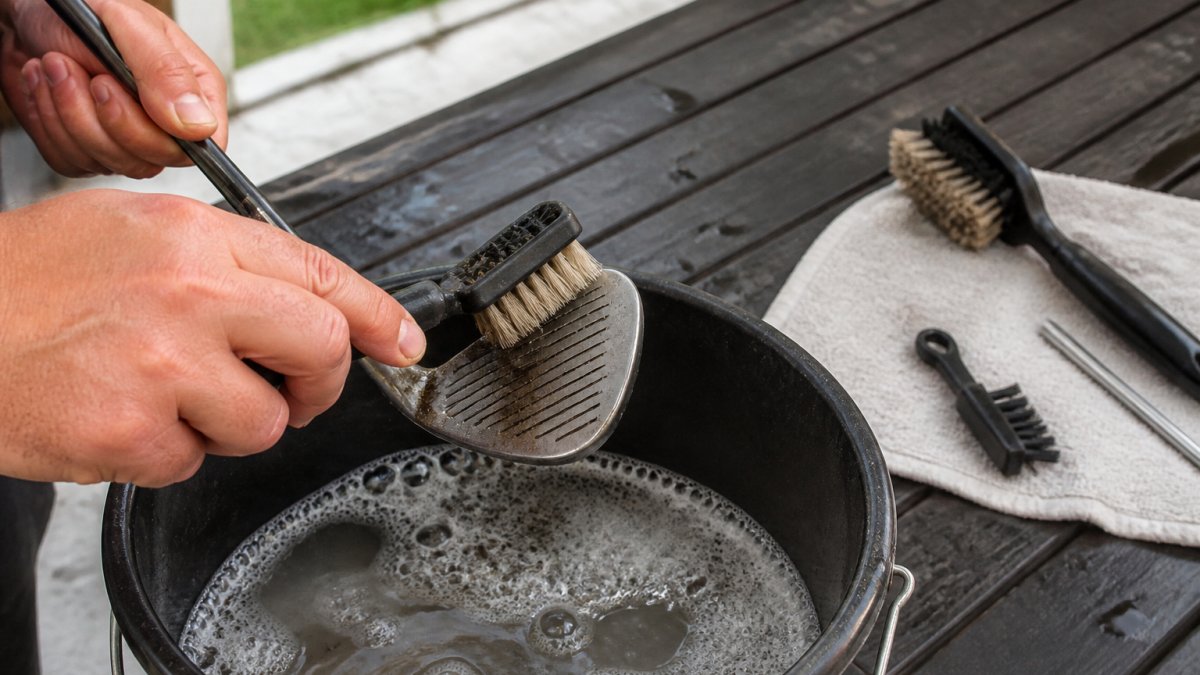
Step 4: Rinse thoroughly Rinse each clubhead under clean running water. Make sure all soap residue is gone. Soap left behind can dull your finish.
Step 5: Dry immediately Wipe each club with a dry towel right away. Moisture left on metal leads to rust. Dry the clubface, grooves, and sole completely.
Cleaning Iron Clubheads
Irons take the most abuse. They hit the ground, collect dirt, and need regular attention.
Soak your irons for 15-20 seconds in warm soapy water. The longer soak helps loosen packed mud in the grooves. Use your brush to scrub the clubface and the sole. Iron soles can handle firmer pressure than driver faces, so don't be afraid to scrub.
Pay attention to the leading edge, the sharp front part of the sole. Dirt hides there. Rinse thoroughly and dry immediately. Iron clubheads rust quickly if left wet.
Never use steel wool or abrasive pads, they scratch the finish.
Cleaning Drivers and Woods Without Submerging
Driver and wood heads are bigger and more delicate. Never fully submerge them.
Dampen a soft cloth with warm soapy water. Wipe the clubface and crown gently. Use a toothbrush on the grooves only, avoid scrubbing the crown or sole too hard. Many drivers have paint or special finishes that scratch easily.
For the sole and edges, use a damp cloth without the brush. Wipe away mud and grass. Rinse with a clean damp cloth and dry immediately.
Cleaning Putters
Putters are the most sensitive clubs. They need a gentle touch.
Never soak a putter. The hosel (the socket where the shaft enters) can trap water and cause rust inside.
Dampen a soft cloth with warm soapy water. Wipe the putter face gently. Use a toothbrush on the grooves with light pressure. Wipe the back, sole, and shaft with a damp cloth.
Dry everything immediately. Putters are precision instruments, moisture can affect performance.
How to Clean Golf Club Grips Properly
Dirty grips slip in your hands. Sweat and dirt build up over time and reduce traction.
Clean your grips every two weeks during regular play. Use a soft cloth dampened with warm soapy water. Wipe each grip thoroughly, covering all sides. Pay attention to the underside where your hand rests, that's where most dirt accumulates.
For stubborn grime, use a soft-bristled brush. Scrub gently along the grip's length. Avoid harsh scrubbing that damages the grip material.
Rinse with a clean damp cloth. Dry completely with a dry towel. Wet grips feel slippery and uncomfortable.
2-Piece Magnetic Golf Towel Set – Premium Waffle Weave Cart & Greens Towels →
Signs your grips need replacement:
- Visible cracks or tears in the material
- Permanent shine or gloss worn away
- Grips feel hard or cracked when squeezed
- Slipping even after cleaning
How Often to Clean Golf Clubs: A Practical Maintenance Schedule
Consistency matters. A simple routine keeps your clubs in top shape.
| Cleaning Task | Frequency | Time Required |
|---|---|---|
| Post-round clubhead wipe | After every round | 5 minutes |
| Full clubhead cleaning | Every 2 weeks | 15 minutes |
| Grip cleaning | Every 2 weeks | 10 minutes |
| Deep groove scrubbing | Monthly | 20 minutes |
| Shaft and sole inspection | Monthly | 5 minutes |
After every round: Wipe your clubheads with a damp towel. Remove fresh mud and grass before it dries. This takes five minutes and prevents buildup.
Every two weeks: Do a full cleaning. Soak your irons, scrub the grooves, and clean your grips. This keeps your clubs performing at their best.
Monthly: Deep clean the grooves with extra attention. Check your shafts for damage. Inspect your grips for wear.
Seasonally: Check your entire set for rust, damage, or grip deterioration. Address any issues before they worsen.
Golfers who play frequently (2-3 times per week) should clean more often. Casual players (once per month) can extend the schedule slightly. The key is consistency, regular light maintenance beats occasional deep cleaning.
What to Avoid When Cleaning Your Golf Clubs
Common mistakes damage your equipment. Understanding why these practices are harmful helps you protect your investment and recognize damage before it becomes expensive.
Never submerge your entire club. Water seeps into the hosel, the socket where the shaft enters the clubhead, and the ferrule (the collar between shaft and head). Once water enters, it corrodes the internal steel connection and can cause the shaft to loosen or separate from the head.
Don't use harsh chemicals, bleach, vinegar, or aggressive scrubbers. These strip protective finishes and remove the paint or powder coat that manufacturers apply to prevent corrosion. Once the finish is compromised, bare metal oxidizes rapidly. Vinegar, despite being a common home remedy, is acidic and accelerates rust on steel club soles and edges.
Avoid steel wool, scouring pads, wire brushes, and abrasive scrubbers. These tools scratch the clubhead finish and remove the anodized coating on aluminum heads. Scratches expose bare metal underneath, which immediately begins to oxidize. Forged iron clubheads, which are softer than cast irons, are especially vulnerable to deep scratching. Even light scratches on chrome-plated heads can lead to pitting and corrosion.
Never leave clubs wet or store them damp. Moisture trapped in a golf bag creates a humid microclimate that accelerates rust on steel components and can cause mold growth on grips and towels. Shafts left wet for extended periods can develop surface rust that, if not removed promptly, pits the metal. Always dry clubheads, shafts, and grips completely with a soft towel immediately after cleaning.
Don't use hot or boiling water. High temperatures can soften or damage the epoxy glue that bonds the shaft to the clubhead at the hosel. Some shaft materials, particularly certain composite shafts, can warp or delaminate if exposed to sustained heat above 140°F. Warm water (around 100-110°F, roughly the temperature of a comfortable bath) is sufficient to soften dried mud and grass without risking structural damage.
Skip commercial club cleaners with unknown ingredients. Many aftermarket cleaners contain solvents or surfactants that can dull finishes, discolor paint, or degrade grip materials over time. Without knowing the exact chemical composition, you risk unintended damage. Dish soap is a proven, mild surfactant that cuts through oils and is safe for all club finishes and materials.
Don't store wet clubs or leave them in damp environments. A damp garage, basement, or storage shed creates conditions for rust and corrosion. If your storage area feels humid, use a small dehumidifier to maintain relative humidity below 50%. Moisture trapped inside a closed golf bag is especially problematic, always ensure clubs are completely dry before zipping the bag closed.
Storage and Moisture Prevention for Long-Term Club Care
Where you store your clubs matters as much as how you clean them.
Keep clubs in a cool, dry place. A climate-controlled closet or garage is ideal. Avoid damp basements or hot attics. Temperature and humidity fluctuations damage club finishes and can warp shafts.
Store clubs upright in a golf bag or stand. Laying clubs flat can bend shafts over time. Upright storage also prevents moisture from pooling in the bag.
Use headcovers on your woods and putters. Headcovers protect finishes and prevent clubs from banging together. They also keep dust and debris off your clubheads.
Check your storage area for moisture. If your garage or storage space feels damp, use a dehumidifier. Excess moisture accelerates rust and corrosion.
Consider a golf towel with a carabiner clip for quick access. Our Course Ready Bundle pairs premium magnetic towels with a lightweight mesh trucker hat, keeping you prepared on the course and helping you maintain your clubs consistently. The bundle includes everything you need to keep your clubs clean and your game sharp.

Keep your clubs away from direct sunlight. UV rays fade paint and can damage grip materials. A dark storage area protects your investment.
Before storing clubs for an extended period (off-season), clean them thoroughly and ensure they're completely dry. Check again before you use them again.
Keeping golf clubs clean isn't complicated, but it matters. A few minutes of regular maintenance extends your equipment's lifespan and keeps your game consistent. Start with warm water, dish soap, and a soft brush. Dry immediately and store properly. Your clubs will thank you with better performance and years of reliable use. Get started with Happy Birdie Hunting's magnetic golf towel set and make club maintenance part of your routine, because clean clubs hit better, and better gear makes the game more enjoyable.
Frequently Asked Questions
Should you clean golf clubs after every round?
Yes, cleaning golf clubs after every round prevents dirt, mud, and grass from drying on the clubface and grooves. Dried debris is harder to remove and can affect club performance by reducing spin and traction. A quick post-round cleaning with a damp towel and soft brush takes just a few minutes and protects your investment.
Can dirty golf clubs affect your shots?
Absolutely. Dirt and grass buildup in club grooves reduce friction between the clubface and the ball, which decreases spin control and consistency. On irons, a dirty clubface can cause shots to fly less predictably. Regular cleaning ensures your clubs perform as designed and helps you maintain shot accuracy and control.
What's the safest way to clean golf club grips?
Use warm water with a small amount of dish soap and a soft cloth or sponge to gently wipe grips clean. Avoid soaking grips for extended periods, as this can weaken the adhesive. Dry thoroughly with a towel afterward. Never use harsh scrubbing or abrasive tools, which can damage the grip material and reduce its traction.
Can I use Dawn dish soap to clean golf clubs?
Yes, mild dish soap mixed with warm water is safe and effective for cleaning golf clubs. It cuts through dirt and grass without damaging metal or paint finishes. Use a diluted solution and avoid soaking the shaft or grips. Rinse thoroughly with clean water and dry immediately to prevent rust and moisture damage.